


PUPPY RAISING
Raising a Litter at
Brinton Goldens
Raising a litter is not a passive experience. It is hands on, intentional, and deeply involved from the moment a pregnancy is confirmed until puppies leave our home. Every stage is guided by development, temperament, and the long term wellbeing of both the dam and her puppies.
This is what that process looks like for us.

Before Puppies Arrive
Long before a litter is born, preparation is already underway. Dams receive careful nutritional support, close monitoring, and a calm, stable environment throughout pregnancy. We track changes closely and adjust care as needed to support both physical health and emotional wellbeing. Whelping supplies are prepared in advance, spaces are sanitized and thoughtfully set up, and plans are in place for multiple outcomes. Nothing about whelping is improvised. The dam’s comfort, safety, and confidence always come first.
Whelping and First Days
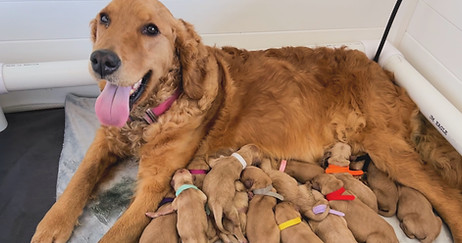
Whelping is quiet, monitored, and supported. We are present and attentive, allowing the dam to do what she instinctively knows how to do while stepping in when needed. The first days of life are focused on warmth, nourishment, rest, and bonding. Puppies are weighed daily, observed closely, and handled gently. We are watching constantly, even when it looks calm. This stage sets the foundation for everything that comes next.


Week by Week
Weeks 1–2: Neurological Foundations During the neonatal stage, puppies are supported through Early Neurological Stimulation (ENS) and Early Scent Introduction (ESI). These brief, carefully timed exercises are designed to positively influence nervous system development, stress tolerance, and early confidence. Handling is gentle and purposeful. Puppies are never overstimulated or pushed beyond what their developing systems can handle. Every interaction matters at this age. Weeks 3–4: Awareness and Transition As puppies begin to see, hear, and move more intentionally, their world slowly expands. They are introduced to new sensations, mild environmental changes, and increased interaction with people in a controlled, thoughtful way. This is a critical transition period. We move slowly, watch carefully, and let the puppies lead the pace. Confidence is built through safety and success, not pressure. Weeks 5–7: Learning the World As mobility and curiosity increase, daily enrichment becomes a central part of each puppy’s routine. Puppies are exposed to new textures, surfaces, sounds, objects, and gentle challenges designed to build problem solving skills, body awareness, and emotional resilience. Enrichment is intentional and age appropriate. We focus on quality experiences, not overwhelm. Puppies are encouraged to explore, recover, and rest.This is also when early temperament traits begin to emerge more clearly. Weeks 7–8+: Preparing for Life Beyond Us As go home approaches, puppies continue building independence, confidence, and comfort with routine handling. We begin preparing them for transitions such as new environments, new people, and time away from their litter. Puppies leave our home with a strong foundation, not a finished product.

Structure
Structure, Routine, and Early Foundations Structure begins early in our program. Puppies are gently introduced to routines that help them transition smoothly into family life.This includes: • Introduction to a litter box and early potty training foundations • Daily crate time beginning around 4 to 5 weeks of age • Positive crate exposure to build comfort and confidence • Regular car rides to reduce travel stress and motion sensitivity • Early leash introduction and gentle handling These routines help puppies learn how to settle, self regulate, and feel secure in new situations. Nutrition and Physical Development Around 3 weeks of age, puppies begin receiving goat’s milk as part of their nutritional support. Feeding routines are structured and consistent to support healthy growth and digestion. We also incorporate gentle water exposure and water therapy when developmentally appropriate to support coordination, confidence, and physical awareness.


Socialization
Socialization in our program is intentional and extensive. Our goal is for each puppy to meet approximately 100 people before leaving us. This includes: • Adults, children, and seniors • Individuals with different voices, appearances, and movement styles • Daily interaction with our cats • Exposure to other dogs and puppies • Introduction to chickens and, when appropriate, goats Puppies are held, handled, and cuddled daily and are taught that people are safe, calm, and rewarding. They also experience: • Visits to assisted living facilities to be held by residents • Visits to a preschool setting to observe and interact appropriately with children • Outings such as Home Depot visits and drive thru stops These experiences help puppies develop confidence around people and environments of all kinds.


Exposure
Outdoor Exposure and Exploration. Weather permitting, puppies spend time outdoors as often as possible. Idaho weather is unpredictable, but we prioritize safe outdoor exposure whenever conditions allow. Outdoor time includes: • Exploring natural surfaces • Exposure to wind, weather, and changing environments • Learning to move confidently in open spaces This supports resilience and adaptability. Veterinary Care and Health Foundations All puppies receive a veterinary visit prior to going home, including: • First vaccinations • Full health clearance • Microchipping This visit ensures puppies are healthy, well monitored, and prepared for their transition to their new homes.

Temperament Testing
Temperament Evaluation and Matching. Around 7 weeks of age, puppies undergo structured temperament evaluations. These assessments, combined with weeks of daily observation, allow us to understand each puppy’s confidence level, sensitivity, energy, recovery, and social tendencies. Puppies are matched to families based on lifestyle, goals, and household dynamics. Placement is not based on color or appearance. It is based on who each puppy is.


Foundations
Early Training Foundations. As puppies mature, we begin introducing early training concepts in short, positive sessions. This is not formal obedience, but foundational learning.This includes: • Beginning manners and impulse control • Introduction to basic cues • Learning to settle and engage calmly • Positive handling and gentle restraint Training is always age appropriate and focused on confidence, trust, and engagement.
Our Role Does Not End at Go Home
Raising a litter does not stop when puppies leave. We remain available for guidance, support, and lifelong responsibility. Every puppy we produce is always welcome back to us if a family’s circumstances change.
We believe ethical breeding includes accountability long after the puppies are grown.
Raised for the Real World
Our goal is not to send home perfect puppies.
Our goal is to send home prepared puppies.
Prepared for noise.
Prepared for people.
Prepared for change.
Prepared to learn.
Raising a litter is time intensive, emotionally invested, and deeply personal. It requires patience, consistency, and a willingness to do things slowly and correctly. This is not the easy way. It is the right way.